Table of contents
Defining both styles
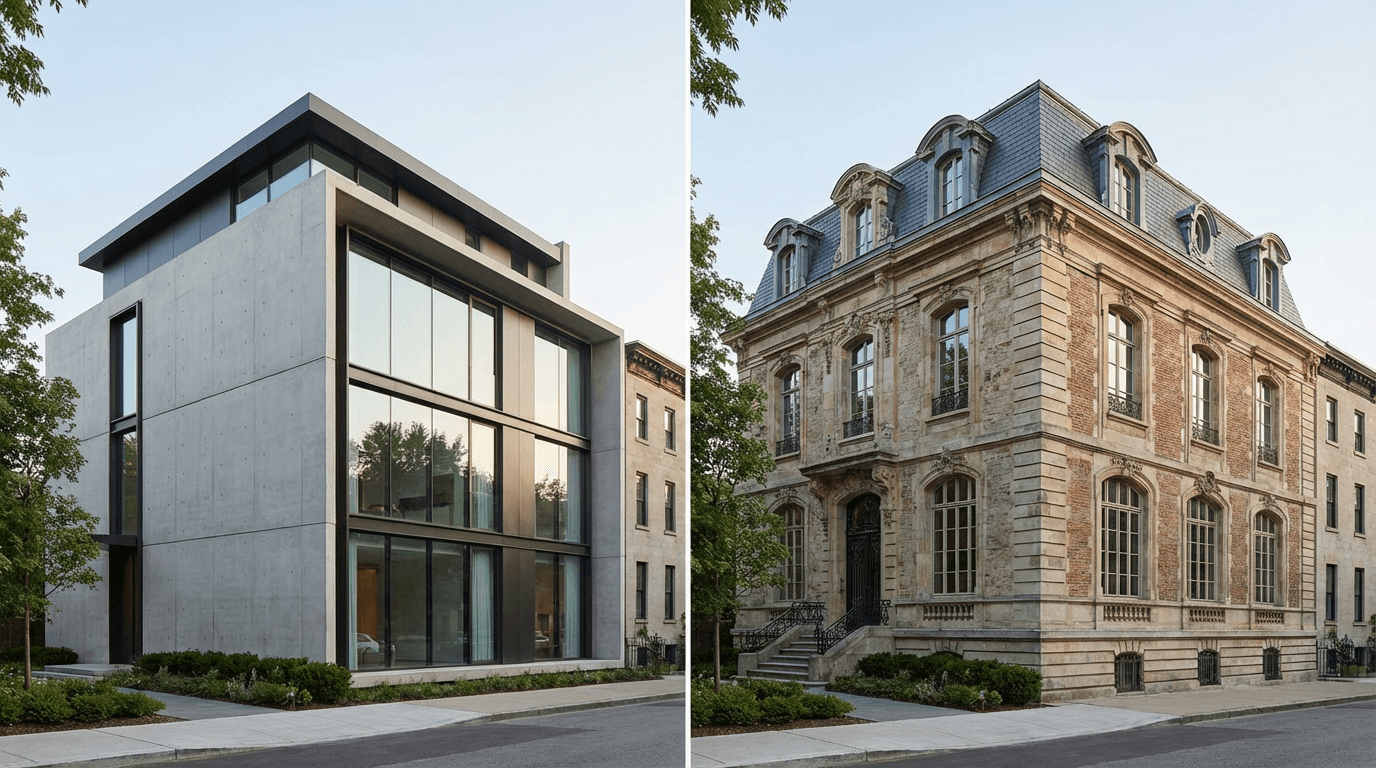
Traditional style is characterized by classic materials (render, stone, brick), balanced proportions, and decorative elements like moldings, hinged shutters, and pitched roofs. Modern style favors clean lines, large glazed openings, contemporary materials (metal, glass, composite), and flat or low-pitched roofs.
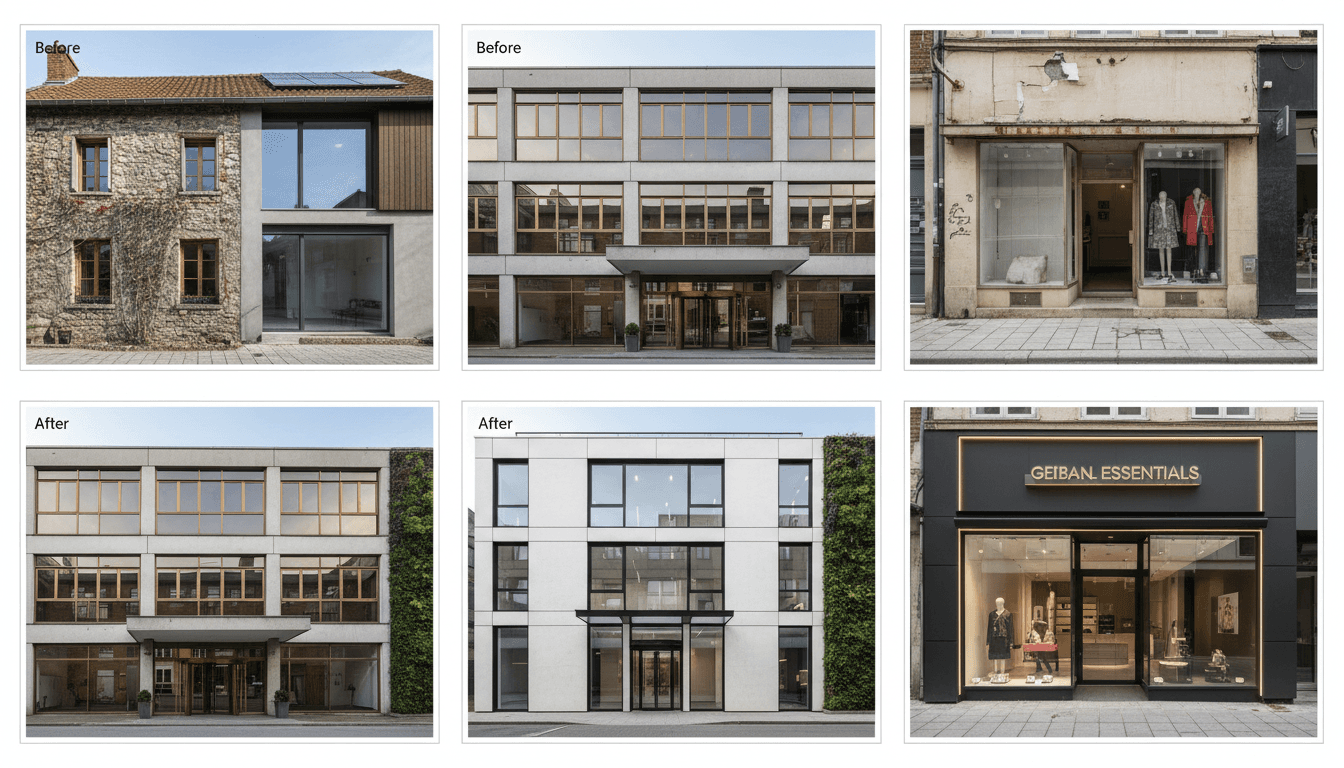
Between these two extremes, there are numerous intermediate styles combining elements from both approaches. AI visualization lets you test each option on your own home.
Advantages of traditional style
Traditional style offers natural integration in historic neighborhoods and villages. It respects local architectural heritage and generally satisfies conservation authority requirements. Traditional materials are well mastered by local craftsmen, facilitating execution and future maintenance.
From a real estate perspective, traditional style is generally well received by potential buyers, especially in regions with strong architectural heritage.
Advantages of modern style
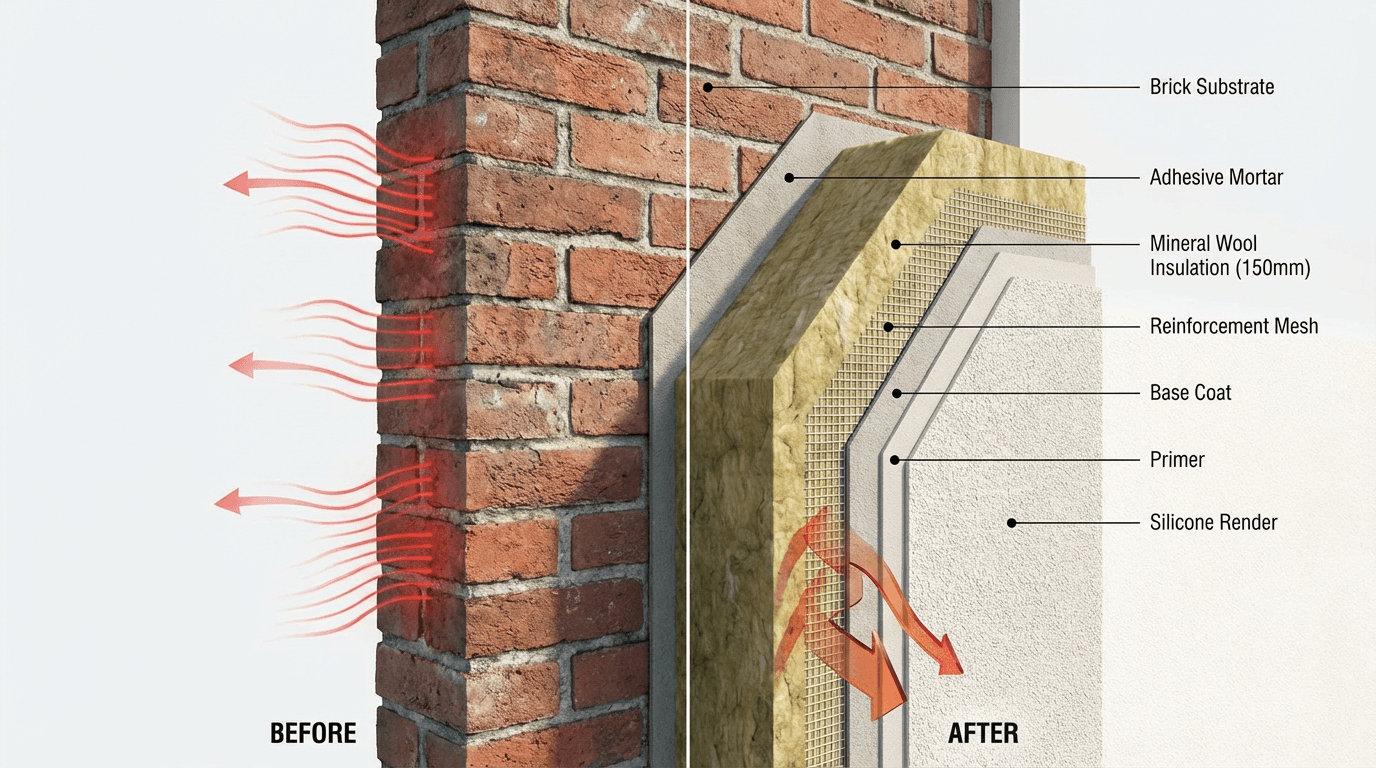
Modern style brings freshness and character to a home. Large openings maximize natural light, contemporary materials offer superior thermal performance, and maintenance is often reduced (composite, zinc, powder-coated aluminum).
A contemporary rendering can also significantly increase the perceived value of a property, especially in urban or suburban areas where buyers seek modern living.
Cost comparison
Contrary to popular belief, a modern rendering is not necessarily more expensive than a traditional one. Classic render costs between 40 and 80 EUR/sqm, while modern composite cladding ranges from 80 to 150 EUR/sqm. The difference mainly comes down to material choice.
However, long-term savings may favor the modern approach: composite cladding requires no maintenance for 20 years, while classic render needs redoing every 10-15 years.
Regulatory constraints
Style choice is often constrained by local planning regulations. In protected zones, traditional style will be required. In unprotected zones, you generally have more freedom. Consult your local planning rules and, if necessary, request a meeting with the planning department before finalizing your project.
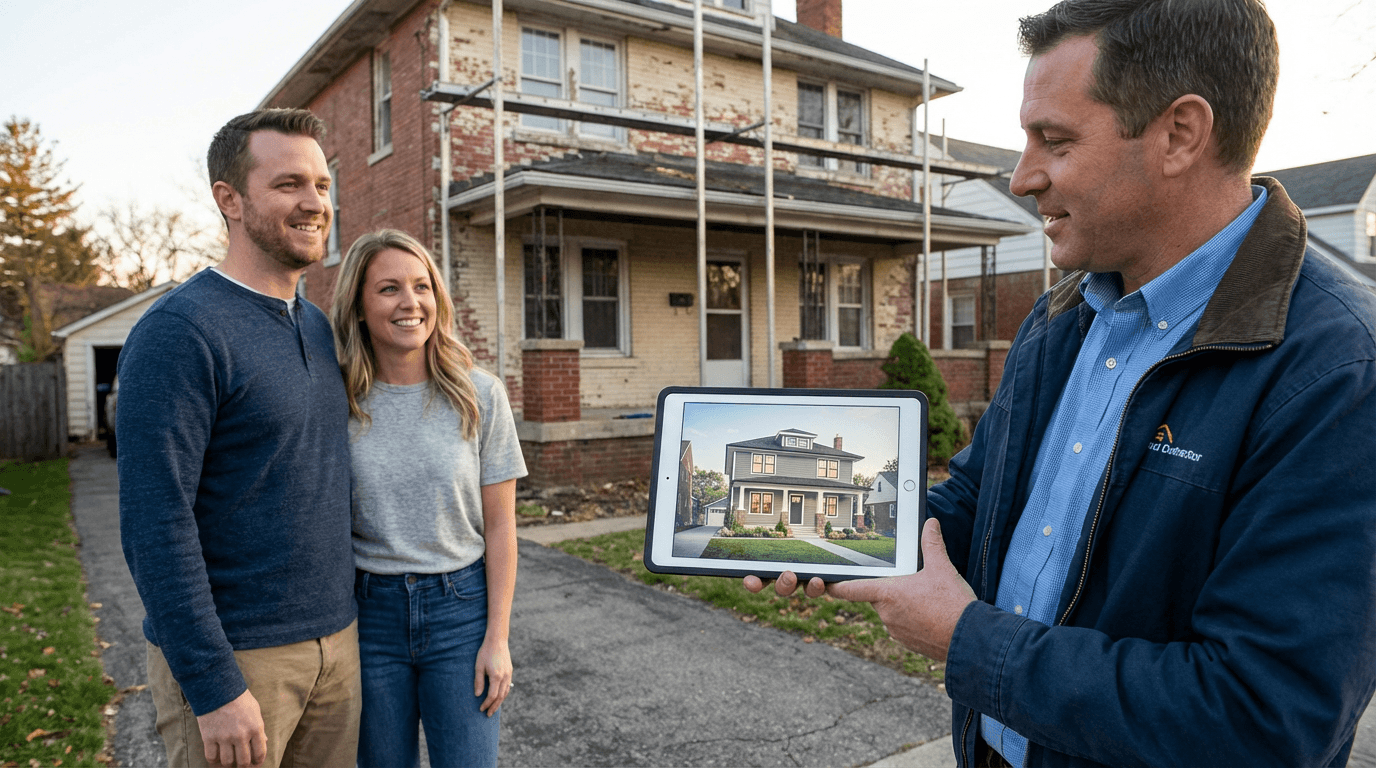
AI visualization is an excellent tool for these processes: present your visual to the planning department for preliminary feedback before submitting a declaration.
Our advice: test before choosing
The best approach is to visualize both styles on your own home before making your choice. Generate a traditional visual and a modern visual, compare them side by side, and show them to those around you. The choice will become obvious when you see the concrete result on your facade.